
HAZELWOOD ROAD, London E17
WHEN OPENING A WINDOW ISN'T ENOUGH: THE HIDDEN CAUSES OF SECONDARY CONDENSATION
SECTOR: Residential / Victorian Property
SCOPE: Damp Investigation, Secondary Condensation, Water Ingress & Ventilation
THE PROBLEM
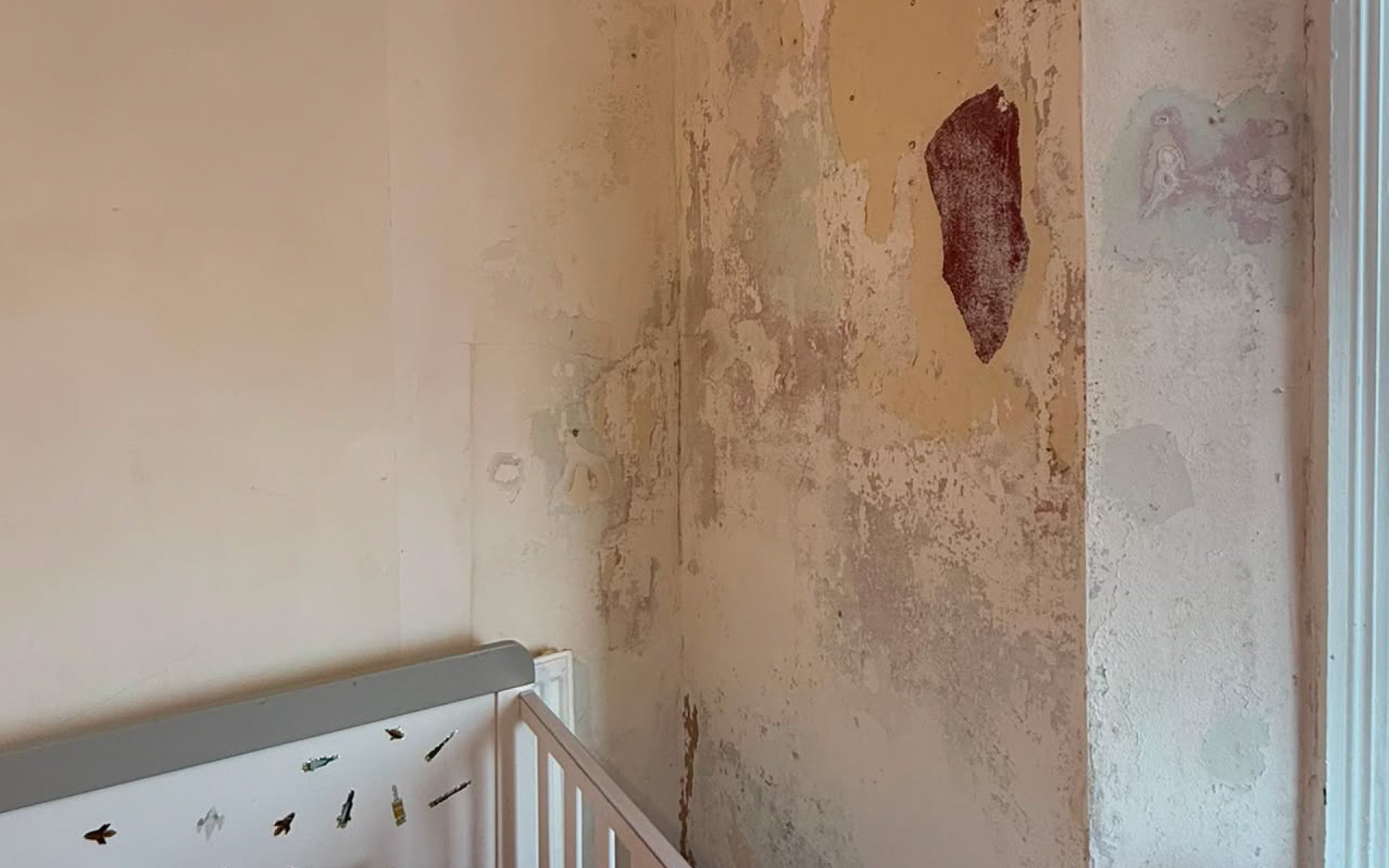
Crownstone were instructed to investigate widespread damp, condensation and black mould affecting a Victorian property converted into flats on Hazelwood Road.
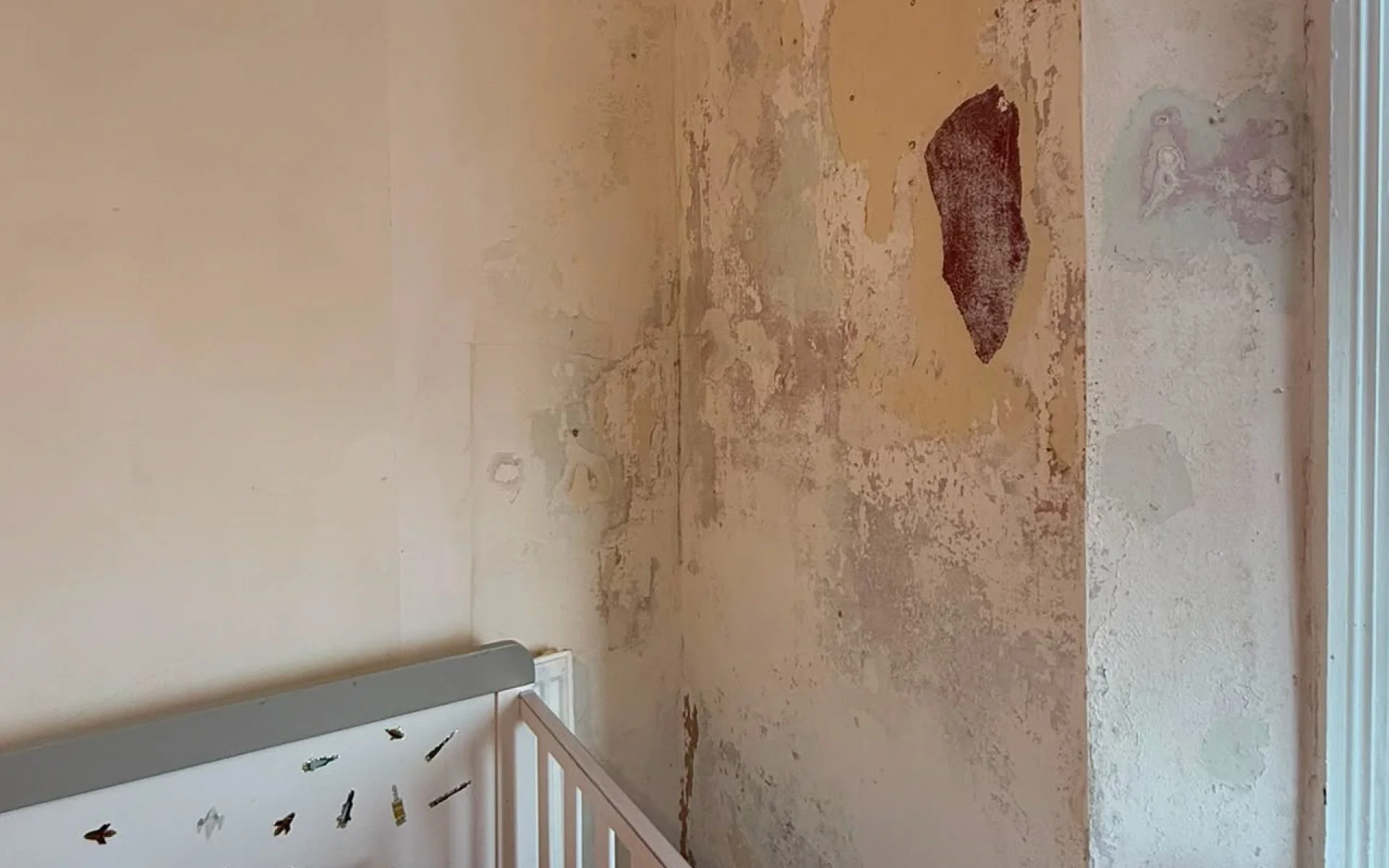
Significant moisture damage was visible throughout the ground-floor accommodation, with blistering plaster, peeling paintwork, damp walls and floors, and black mould developing in several rooms.
Condensation is often attributed to everyday activities and inadequate ventilation, with occupants commonly advised to open windows to reduce moisture levels. (Primary condensation = Air moisture created by everyday living).
However, opening a window isn't always enough, particularly when underlying building defects are contributing to excessive moisture within a property. (Secondary condensation = Air moisture created by building defects).
The client needed to understand whether the condensation and mould were simply ventilation-related or symptoms of a wider problem.
THE CAUSE
Crownstone's investigation identified several contributing factors creating conditions for secondary condensation and recurring mould.
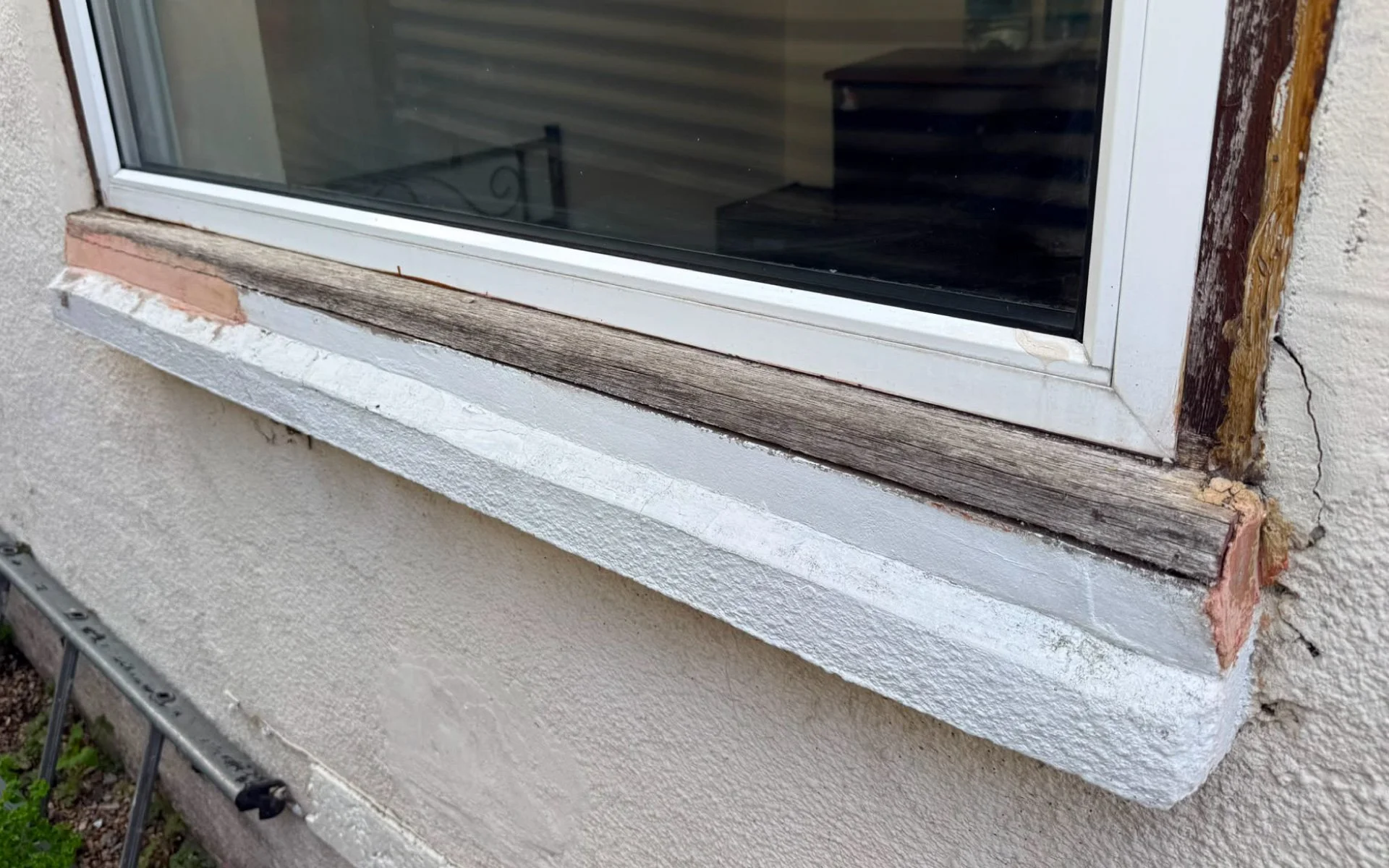
External Water Ingress: Defective guttering was allowing rainwater to overflow onto external walls, while deteriorated timber window frames were allowing further moisture to enter the property.
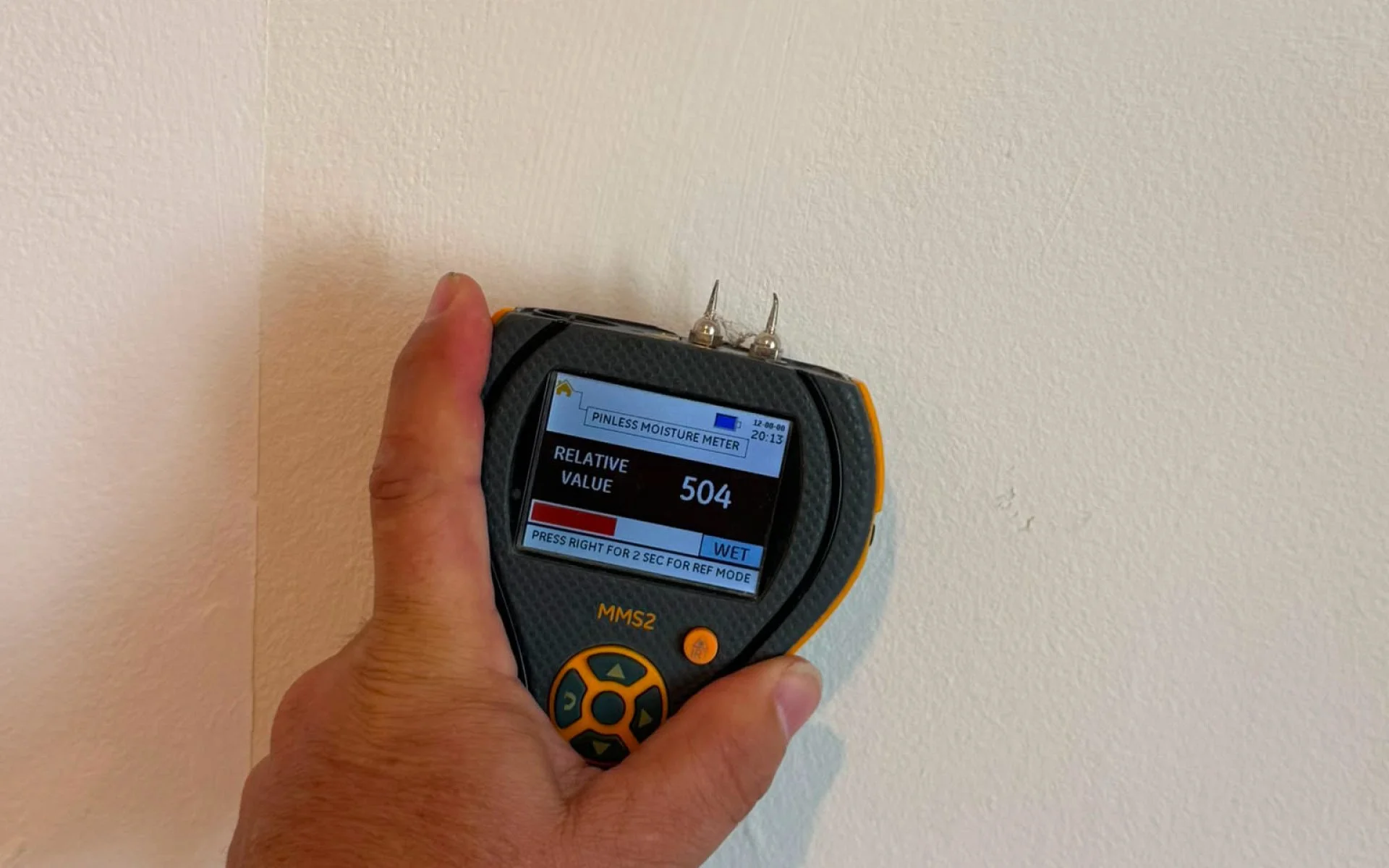
Trapped Moisture:Previous alterations to the concrete flooring had compromised the property's existing damp protection. Unsuitable plaster was also absorbing and trapping moisture within the walls, preventing them from drying effectively.
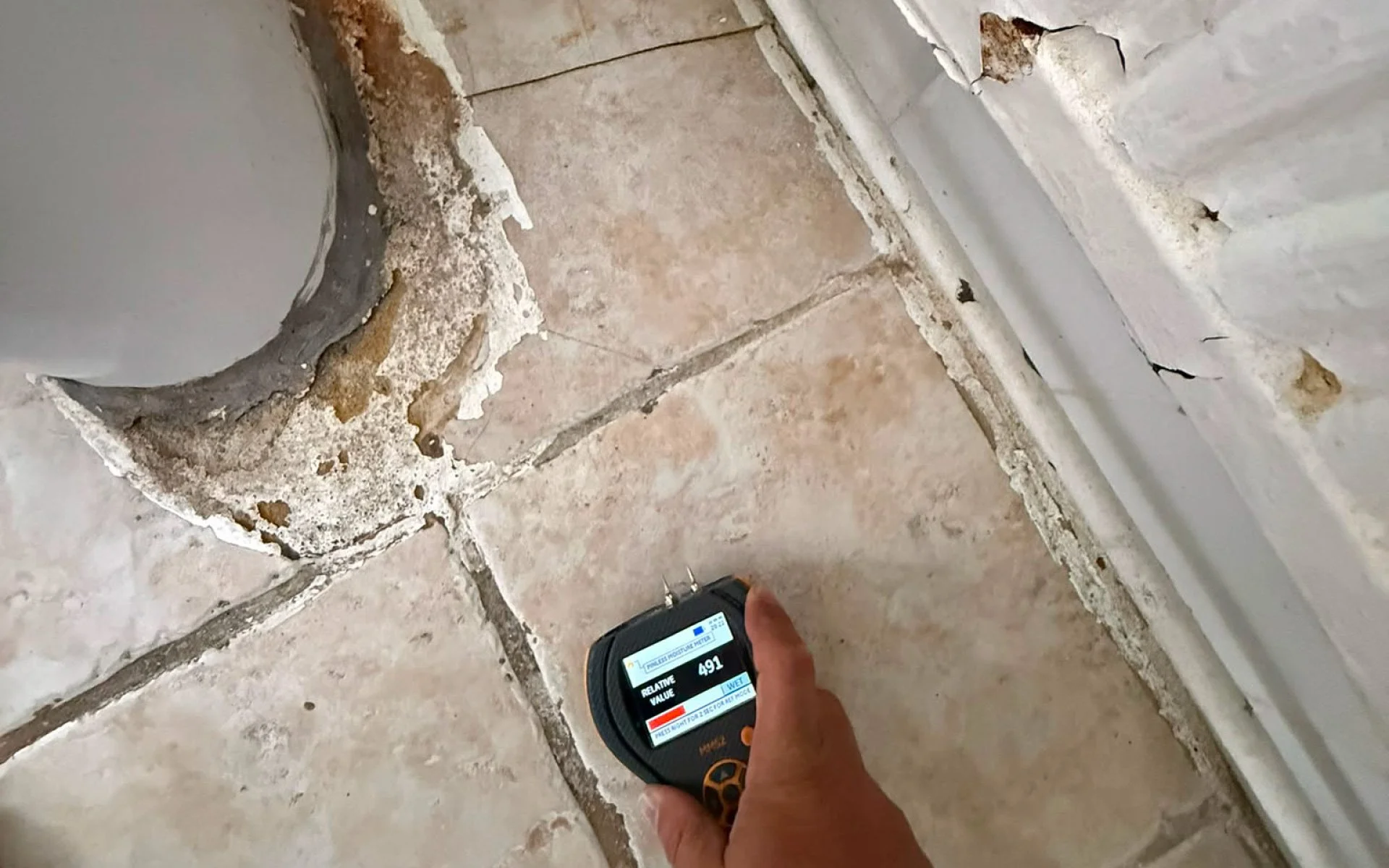
Suspected Plumbing Defects: Severe saturation beneath the kitchen and bathroom floors suggested a possible concealed plumbing or drainage defect, requiring further investigation.
Inadequate Ventilation: Kitchen and bathroom ventilation was not operating during the inspection, allowing air moisture from any source to accumulate.
Combined with the underlying damp conditions, this increased the risk of persistent condensation and black mould. Crucially, improving ventilation alone would not address the building defects contributing to the problem.
CROWNSTONE’S SOLUTION AND OUTCOME
Crownstone recommended a coordinated approach to tackle both the underlying moisture sources and the resulting condensation. This included repairing defective guttering, replacing deteriorated windows and removing unsuitable plaster to allow affected walls to dry.
Further investigation was recommended to identify any concealed plumbing or drainage defects before drying and reinstating affected floors and walls. Improvements to kitchen and bathroom ventilation were also recommended to help control everyday humidity.
By addressing the building defects alongside ventilation, the proposed strategy aimed to reduce recurring condensation and mould, rather than simply treating the visible symptoms.
Crownstone's investigation established that condensation and mould were not solely the result of inadequate ventilation. Multiple building defects were contributing to excessive moisture, creating conditions in which secondary condensation and black mould could persist.
The client was provided with a clear strategy to address the underlying causes, reduce the risk of recurring problems and avoid repeated maintenance costs and unnecessary disruption to residents.

THE KEY MESSAGE FOR LETTING AGENTS & PROPERTY MANAGERS
Not all condensation can be solved by opening a window.
While good ventilation is important, recurring condensation and mould can indicate underlying building defects, including water ingress, trapped moisture or concealed leaks. Simply advising tenants to open windows or repeatedly cleaning away mould is managing symptoms, rather than identifying the source, and may not resolve the problem.
At Hazelwood Road, Crownstone demonstrated the importance of investigating the root causes rather than assuming condensation is down to occupant behaviour.
If condensation and mould keep returning in a property you manage, it may be time to look beyond ventilation. Crownstone's specialist investigations identify the underlying causes of damp, condensation and mould, helping property professionals make informed decisions about effective remedial action.
Get in touch to arrange a specialist investigation:
Email: simonmartin@crownstonegroup.co.uk
Call: 020 8226 5654
Understand the causes and what to do next. Watch our video and download your free practical guide.